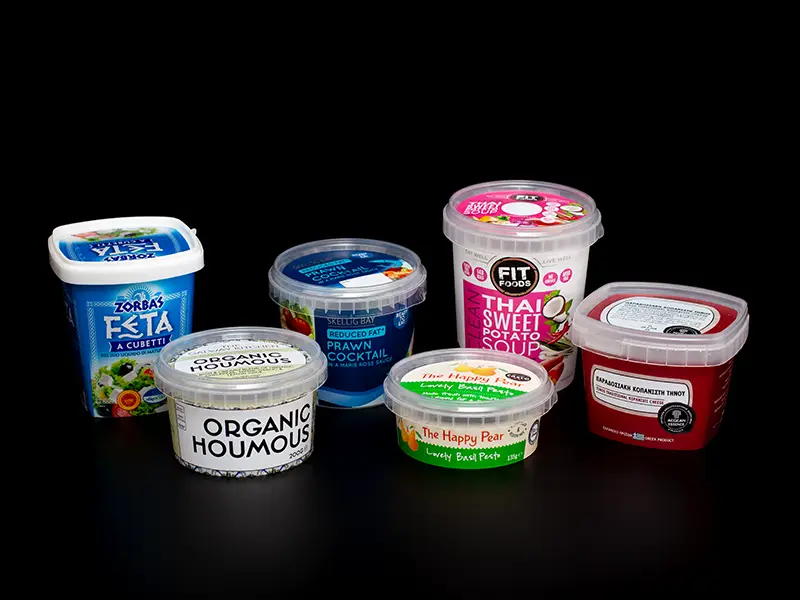
How to source the best microwavable food containers for your production line
Food containers of any sort have to meet very exacting requirements. They must be food-grade quality, while also being extremely robust. They need to be a standard internal size to take the right portions of food (1, 2 or 4 people usually), and they need to stack or pack well. Finally, they should be easy to brand, and the branding should remain fixed, regardless of the rigours of transportation.
Microwave-friendly containers require an even higher specification, as they will need to withstand extreme temperatures, both freezing and hot, without warping or cracking.
This guide looks at what is required from a microwavable container, plus the additional considerations that separate a great supplier from a mediocre one.
Venturepak can manufacture a comprehensive range of microwavable containers to your requirements and offer in-mould labelling. Click here to speak to our team.
The demanding requirements placed on microwavable food containers
Ready meal packaging has to withstand much more than the 5 minutes it spends in the microwave at the end of its journey. It needs to run through the food production process, passing through automated filling and sealing lines and being branded by in-mould labelling or stick-on information. It will then be packed and shipped around the world, subject to freezing, vibration, impacts, heat and storage before finally being chosen from the freezer or chiller cabinet and placed in the microwave.
The right container, then, is one that won’t warp in the microwave, but also won’t crack, shatter, bend or dent at any stage before the consumer purchases it. If you are choosing the right microwaveable container, then there are several key elements you need to consider before settling on a manufacturer.
If you are looking for a new packaging supplier, speak to our team, and they will be delighted to help
Temperature range: from sub-zero to intense heat without warping, cracking or leaking.
Standard plastic food containers are often subject to a wide range of temperatures, but this is nothing compared to the range a microwave-friendly container is expected to withstand without damage. During storage and transport, many products will be held at ultra-low temperatures, including blast chilling, where the temperature drop is rapid. Sub-standard containers or packaging not designed for blast chilling will often become brittle as the plastic degrades, which is disastrous for the quality of food and the impact on your brand.
A plastic food packaging specialist, such as Venturepak, manufactures the containers so they are resistant to sudden temperature changes and exposure to freezer storage. We also specialise in ice cream tubs, so our knowledge of the effects of cold on food-grade plastic is exceptional.
Once the product has been purchased, it will then be placed into rapidly increasing temperatures, as the food is cooked in the microwave. Using polypropylene gives the container rigidity, and the plastic retains its integrity across a vast temperature shift.
See our range of polypropylene food-grade plastic containers here.
Maintaining structural integrity during production
Temperature range is just one element of stress placed on plastic food containers when they are used for ready meals. The production process itself can be a tough experience for the wrong container. A contract food packager, or a large-scale ready meal manufacturer, will have a high-speed filling and sealing process. This will require the container to be repeatedly handled by a combination of conveyors, pulleys, wheels and robotics, plus human quality checkers and factory workers.
The right microwavable food containers need to have robust wall thickness and stable constituent materials to prevent warping and breakages, which would lead to costly stoppages and misfeeds. The more often the production line needs unblocking, the more expensive and unprofitable the product becomes. A weak container, or one made to the wrong specifications, can be disastrous for an efficient assembly line.
Venturepak has an excellent reputation for food-grade, manufacturer-friendly plastic containers. Find the size and shape you need here.
Tamper-proof sealing
A plastic container used for food, especially microwavable ready meals, must have tamper-evident sealing. A well-sealed pot or tub will ensure the food is preserved to the specifications of the use-by date. Don’t select a plastic container of any sort for your food manufacturing process unless it is tamper-evident and can be sealed correctly.
Venturepak have a wide range of tamper-evident pots and tubs. See our range here.
Logistics-friendly sizes and shapes
The final aspect to consider when choosing a microwavable food container is the size, shape and how well the packaging stacks. The final product needs to be convenient for multiple partners in the supply chain. For instance, the easier and more efficiently you can pack each pallet, the lower the cost of transport per unit. For supermarkets and retailers, freezer and fridge space is at a premium, and if your product packs efficiently into their shelves, then you will have more items available for sale at once without waiting for shelf restocks.
Map the size of the portion with the most efficient container dimensions for logistics, then compare it to the size of branding and labelling space on the lid or sides. The right container will stack well and allow for eye-catching branding and regulatory food labelling as well.
Venturepak offers a wide range of sizes, depths and shapes. Find out more here.
The importance of a reliable packaging manufacturer
In this guide, we’ve looked at the physical attributes required from premium microwavable food packaging. The best food packaging manufacturers, such as Venturepak, combine an excellent product with reliable, on-time, and in-full supply. We offer a wide range of different container shapes and sizes, and our consistent service means you can schedule your production runs with confidence. We also provide In-Mould Labelling to ensure your ready meal lines are even more efficient and robust.
Venturepak manufactures 100% food-grade polypropylene microwavable containers in pallet quantities, with a manufacturing and delivery schedule to suit your requirements. Speak to our team here.
Microwavable food containers: Frequently Asked Questions
Can microwavable food containers go from freezer to microwave safely?
As long as the container is manufactured from food-grade polypropylene to a high industry standard, then yes, the packaging will withstand large swings in temperature. They can even be used in blast chillers ready for shipping.
What’s the difference between a microwave-safe container and a standard plastic food tub?
Standard plastic packaging is often designed for food portioning, takeaways or small “for tonight” vendors. This means they aren’t tested or manufactured to conform to very high or very low temperatures, such as microwaving or storage in a freezer. They are more likely to warp in heat and become brittle after being frozen.
Does Venturepak supply microwavable containers in bulk for contract packagers?
Venturepak can supply pallet quantities of food-grade, temperature-resistant packaging to a schedule that suits your production planning. We can also provide on-product branding thanks to our in-mould labelling service.